SAMPLE 014
Retail04:12
Return desk handoff
Two cameras on a weekend return desk. Every override is timestamped by the associate who approved it.
Live capture / today's records
Ultro Labs records the decisions your best people make, and the reason behind each one, as the work happens. You own every record. Every dataset comes with a test.
Unstructured moment
Customer messages about a wrong charge
14:08:21 · Log
“I was charged twice for the same order.”
14:08:24 · Audio
Agent pulls up the billing history
14:08:29 · Screen
Structured record
VerifiedCharge disputed
The collection
Every engagement produces at least one of these, tied to the person who made the call and the reason they gave.
Work as it happens, framed so the decision is visible.
A weekend return desk, two angles, every override called aloud.
The reasoning out loud, marked at the moment of the call.
A rep narrating why a discount got approved.
What a person actually looked at, in the order they looked.
Eight bookings moved in a scheduling tool, each with a spoken reason.
The readings, lined up with the operator's note that explains them.
Seventy-two hours of store traffic next to the manager's log.
Decisions with their inputs attached, not their outcomes.
Four hundred discount approvals and what the rep said first.
Specimen library
Real examples of finished work. Each sample says what it is, how we recorded it, and how we tested it.
Two cameras on a weekend return desk. Every override is timestamped by the associate who approved it.
Waveform plus a transcript marked at the moment the agent decided to escalate the case.
A scheduler moving eight bookings in a legacy system, with a spoken reason recorded for each move.
Foot-traffic counts and cooler temperature from one location, aligned to the manager's note on what changed.
Four hundred discount approvals with the reason the rep actually gave, not the one the system recorded.
The specimen that matters most does not exist yet, because nobody has recorded it.
The supply problem
The open web keeps growing, but the pool of attributable, human-made source material does not grow with it. Here we explain why clean records now have to be made at the source.
What the pool does
01 · Direction
A rising share of what gets published on the open web is written by machines, not people.
Measured by multiple independent web content studies. The direction is not in dispute.
02 · Rare tail
Models trained on model output collapse. The rare cases go first, then the specifics.
Shumailov et al., AI models collapse when trained on recursively generated data, Nature, 2024.
Source03 · Fixed pool
The pool of verifiably pre-2022 human writing does not grow. It only gets spent.
A supply constraint, not a forecast. Nothing new is being added to that pool.
Copy chain, generation 01 of 08
Detail kept:100%
Generation 1 of 8. Marisol has run the returns desk for eleven years. She can tell from the tape on a box whether the customer repacked it at home or in the parking lot, and she knows the difference matters: parking lot returns are impulse regret, home returns are real defects. None of this is in the manual.
What we do
Supply line 01
We record work your people already do, and the reason behind each call, at the moment they make it.
Counter camera · Spoken reason · Exception logged
A counter camera catching how an associate actually handles a return, not the order the manual lists.
1:1
Every decision, with its reason attached
Supply line 02
The same protocol run at several sites, so a finding holds up outside one building.
Shared intake · Four locations · Variance compared
Four locations running one intake script, so a pattern is a pattern and not a local habit.
4
Locations running one script
Supply line 03
Our collectors go where the work is: a cab, a route, a dock. Camera and mic on from the first minute.
On route · Audio + video · Custody logged
A collector riding a service route for a week, recording the call and the reason given.
5
All five kinds of record
“A dataset without a test is a claim. A dataset with a test is an instrument.”
The asset
A model license expires. A dataset does not. Data collected on your own ground stays on the balance sheet, it is used again with every model you try, and it gets more valuable as the open supply gets worse. You are not renting an answer. You are buying an asset, and you own it outright.
Data you own
AccruingUsed again with every model you try, and it stays on the balance sheet.
A model license
ExpiringRented for a term. When it lapses you are back where you started.
From the manifesto
The open web is filling with text that no person wrote and no person checked. It is cheap to make and it reads well enough to pass. Every month there is more of it, and every month the average page is a little further from anyone who did the work it describes.
Models trained on that output drift. When a system learns from its own output, the rare cases go first, then the specifics, and what is left is a confident average. The finding has a name and a citation: Shumailov and colleagues published it in Nature in 2024. The practical version is simpler. Copies of copies fade.
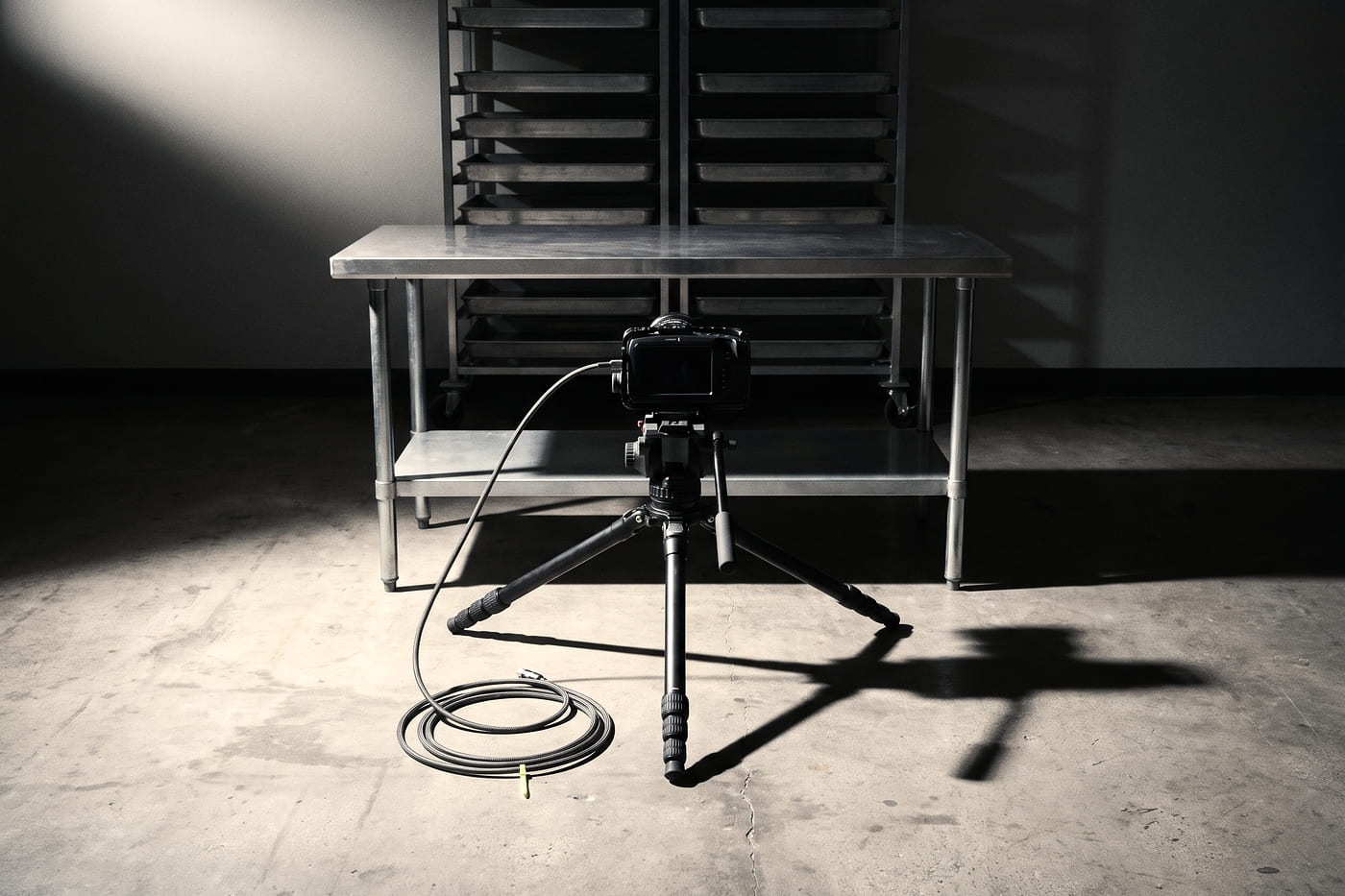
Warehouse floor, second shift
Copies of copies fade. Originals do not.
Start here
Every record opens with who filed it.
Backing
We go inside companies and record how the work really gets done. The company owns every record.